
Integrated Pest Management (IPM) has become one of the most effective and environmentally responsible strategies for safeguarding crops while maintaining ecological balance.
Integrated Pest Management (IPM) has become one of the most effective and environmentally responsible strategies for safeguarding crops while maintaining ecological balance. Rather than focusing on extermination, IPM promotes prevention, observation, and intelligent intervention—using biological, physical, and, only when necessary, chemical methods to keep pest populations under control.
Over the last decade, IPM has gained strong adoption across Europe’s most advanced greenhouses and farms, driven by the push to reduce pesticide dependence and protect beneficial organisms such as pollinators and predatory insects. Market demands, updated legislation, and farmers’ growing environmental awareness have accelerated this transition toward cleaner and more selective crop management systems.
Among the essential tools for modern IPM, colored sticky traps play a central role. Their purpose extends beyond capturing insects—they act as early-warning sensors, allowing farmers to detect emerging pest populations before visible damage occurs. However, their successful use depends on one crucial factor: compatibility with biological control programs. The traps must avoid unintentionally catching beneficial species such as Orius, Encarsia, or Amblyseius, which naturally regulate pest outbreaks.
The future of IPM lies in the strategic integration of these traps with biological solutions, creating systems where technology, observation, and ecology work together to achieve healthier, more resilient, and profitable crops.
Sticky Traps: A Diagnostic Tool for Smarter Pest Monitoring
Within a comprehensive IPM plan, chromatic sticky traps are more than a capture method—they’re a continuous monitoring system that reveals the real-time health of the crop. By tracking captures weekly, growers can detect pests early and make timely management decisions.
Each trap color is tailored to specific pest behavior:
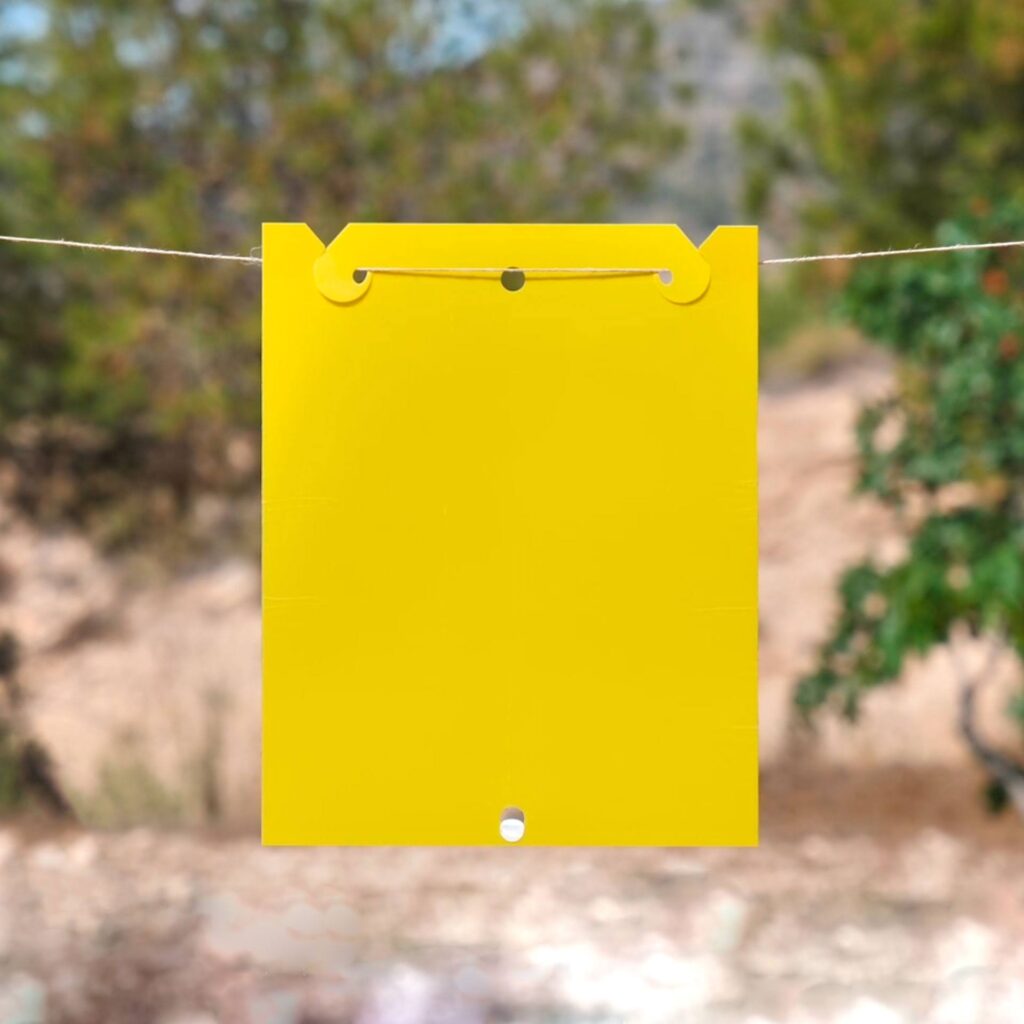
- 🟡 Yellow traps attract whiteflies (Bemisia tabaci, Trialeurodes vaporariorum) and leaf miners (Liriomyza spp.).
- 🔵 Blue traps are highly effective for thrips (Frankliniella occidentalis).
- ⚫ Black traps are ideal for fungus gnats (Bradysia spp.), common in humid substrates and hydroponic systems.
There are two distinct uses:
- Monitoring traps, distributed across the crop to detect early presence and track pest trends.
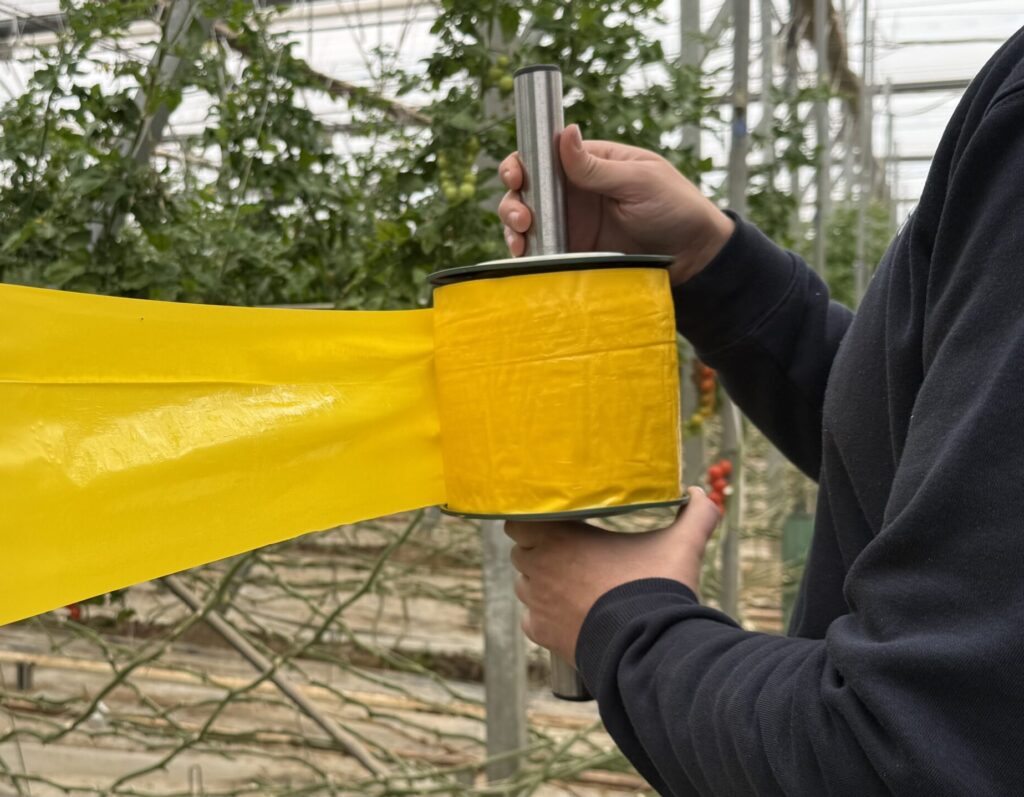
- Mass-trapping systems, with higher density to directly reduce adult populations.
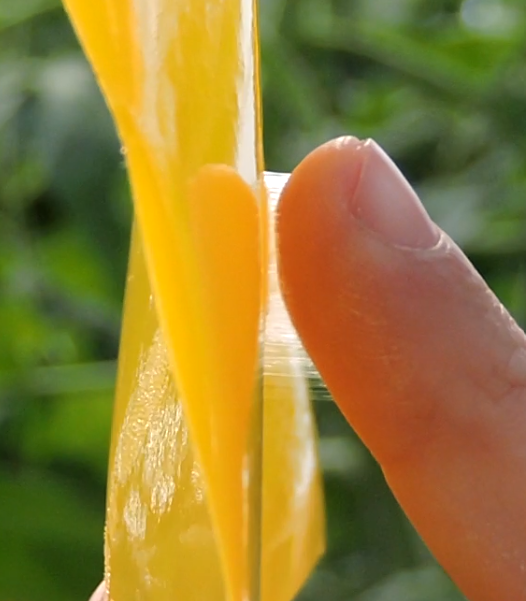
Unlike chemical methods, color traps don’t create resistance, leave residues, or disrupt biodiversity, making them ideal for organic and eco-certified farming. Consistent trap maintenance—inspecting weekly and recording captures—builds valuable data that supports more precise IPM decisions.
The Role of Biological Control: Nature’s Silent Partner
Sticky traps are just one part of the equation. In a balanced IPM program, biological control is what maintains long-term stability. Combining traps with beneficial insects allows for early detection, targeted action, and ecosystem protection—all without relying on excessive chemical inputs.
Three main groups of beneficial organisms support this balance:
- Predators (Amblyseius swirskii, Orius laevigatus) that feed on thrips, mites, and larvae.
- Parasitoids (Encarsia formosa, Aphidius colemani) that disrupt pest life cycles.
- Entomopathogens and beneficial microbes (Beauveria bassiana, Trichoderma spp.) that act on soil pests and strengthen plant immunity.
The synergy between traps and biological agents forms a self-regulating defense network that minimizes pesticide use, preserves biodiversity, and aligns with Europe’s zero-residue market standards.
How to Use Sticky Traps Without Affecting Beneficial Insects
To ensure traps work harmoniously within a biological system, placement and density must be carefully planned. Install them near air inlets, vents, and typical pest entry points—away from zones where beneficial insects are released.
Trap density depends on crop type and pest risk. Dense canopies or historically infested areas may require closer spacing, while newer plantings may need fewer. Avoid positioning traps at the flight height of predators like Orius or Amblyseius, and use color-specific traps (blue for thrips, yellow for whiteflies) to minimize accidental captures.
Timing is another factor: traps can be installed before releasing beneficials to assess baseline pest pressure, or after if the goal is to contain an outbreak. Regular replacement is key—saturated traps lose their stickiness and distort monitoring results.
💡 Expert Insight: Keep a visual and numeric record of captures. This data helps refine release schedules and continuously improve your IPM strategy.
Frequent Mistakes When Combining Sticky Traps and Biocontrol
- Overuse of traps near crop canopies can interfere with natural enemy activity.
- Neglecting replacement schedules reduces trap accuracy and effectiveness.
- Skipping data recording leads to poor decision-making and missed pest thresholds.
- Misaligned timing between trap setup and beneficial releases may cause accidental captures and increase re-release costs.
Avoiding these pitfalls ensures your IPM program stays balanced, efficient, and sustainable.
The Broader Impact of Modern IPM Integration
When sticky traps and biological control are used together, the results extend far beyond pest control. Growers experience:
- Greater efficiency and stable long-term pest management.
- Lower chemical dependency and improved resistance prevention.
- Reduced environmental footprint aligned with sustainability certifications like GlobalG.A.P.
- Higher profitability, thanks to fewer treatments and healthier, higher-value crops.
Ultimately, modern IPM demonstrates that technology and nature can work in harmony. Properly installed sticky traps are not passive tools—they’re precision instruments that help growers produce clean, market-ready crops while preserving the ecological balance that sustains agriculture.
👉 Contact Hunalan’s technical team to design a customized IPM plan using our next-generation sticky traps—tailored to your crop, climate, and sustainability goals.
Deja una respuesta