
Sticky traps perform at their best when installed correctly.
The height and position of each trap directly affect the number and type of insects it captures, since pest flight patterns vary depending on the crop and its growth stage.
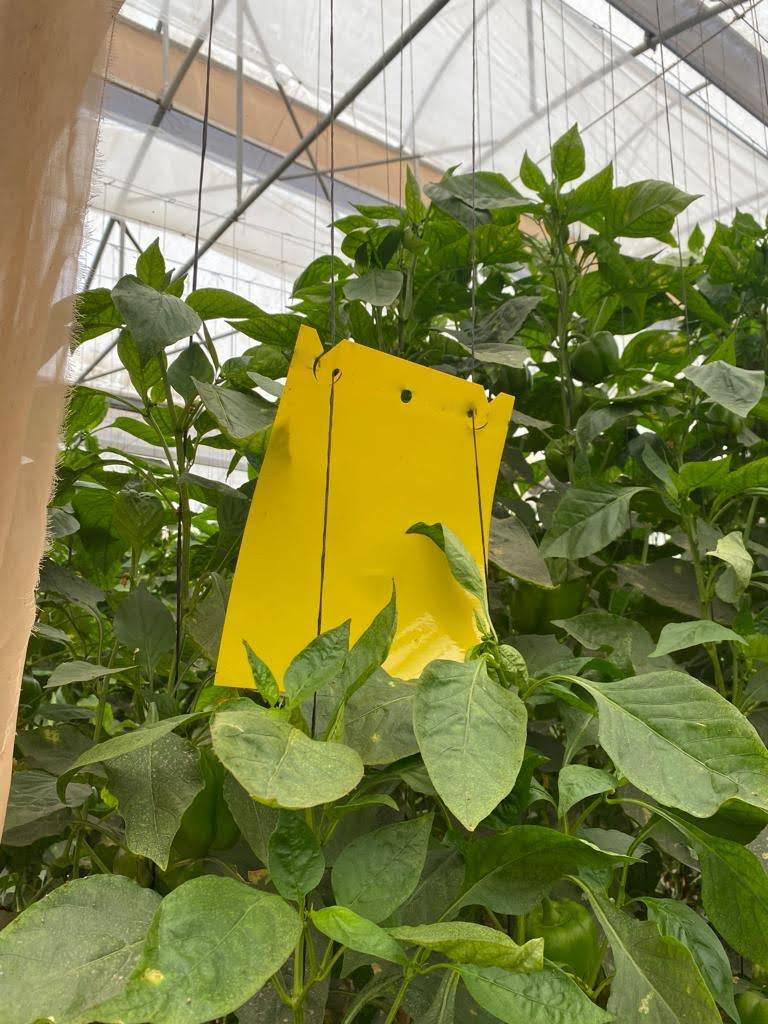
In low crops like strawberries or lettuce, traps should hang at foliage level, just above the upper leaves. For taller crops such as tomatoes, peppers, or cucumbers, place them between the middle and upper canopy, adjusting height as the plants grow. In ornamental or cut-flower production, it’s best to install traps both within the crop and near entrances to detect external infestations early.
Avoid any contact between traps and leaves, poles, or metal structures. This contact reduces adhesive surface and collects dust or debris, decreasing trap effectiveness. Correct placement guarantees uniform pest monitoring and accurate detection across the entire greenhouse.
Pro tip: Inspect trap height and replace used traps weekly, especially during rapid vegetative growth or after pruning. Keeping traps visible and properly positioned often determines whether you catch a pest outbreak early—or lose part of your harvest.
10 Essential Checks to Keep Sticky Traps Performing All Year
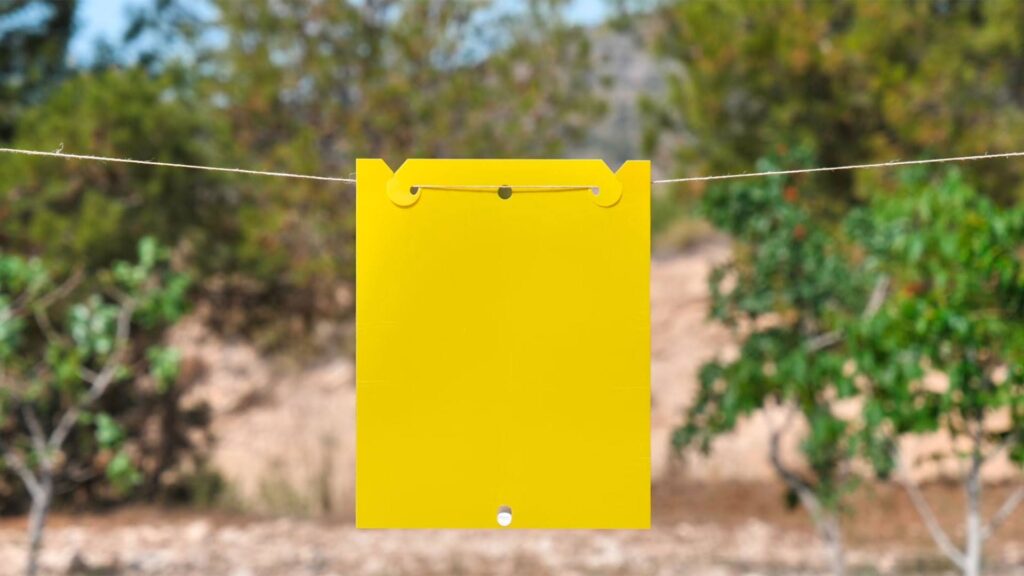
Consistent maintenance is the easiest way to prevent infestations. Follow these simple checks to ensure your chromatic traps capture accurately throughout every season.
1. Confirm Proper Height and Placement
Trap location is key to performance. Every pest species moves differently—some closer to the canopy, others near the ground—so trap height must match the crop’s structure.
For low-growing vegetables such as lettuce and strawberries, place traps just above the leaves. For crops like tomatoes or peppers, install them in the upper canopy and adjust their height as plants develop. For ornamentals, position traps both inside the growing area and near doors or vents to identify incoming pests.
Always keep traps away from leaves, wires, and structures to maintain a clean, fully sticky surface for maximum capture.
2. Check Light Exposure
Color visibility is what attracts insects. Traps shaded by foliage or structures lose efficiency. Make sure each one receives even light exposure and adjust positioning as your plants grow. During winter, when the sun is lower, slightly raising the traps helps preserve their visual lure.
3. Inspect the Adhesive Quality
Moisture, dust, and trapped insects can reduce adhesion. A trap should always feel uniformly sticky. Hunalan traps feature a 91% active adhesive surface, the highest on the market, maintaining full tackiness even under tough greenhouse conditions. Replace any trap that feels dry or oversaturated to avoid inaccurate pest counts.
4. Replace According to Pest Pressure
Not every trap has the same lifespan. Replacement frequency depends on crop density, pest pressure, and temperature. Regularly swapping traps ensures consistent data and timely pest detection before infestations spread.
5. Keep Surrounding Areas Clean
The cleaner the environment, the better the trap performance. Remove dust, pollen, and plant residue weekly from nearby structures and pathways. This improves airflow and color visibility—two key factors for steady pest capture.
Why Hunalan Traps Deliver More Reliable Results
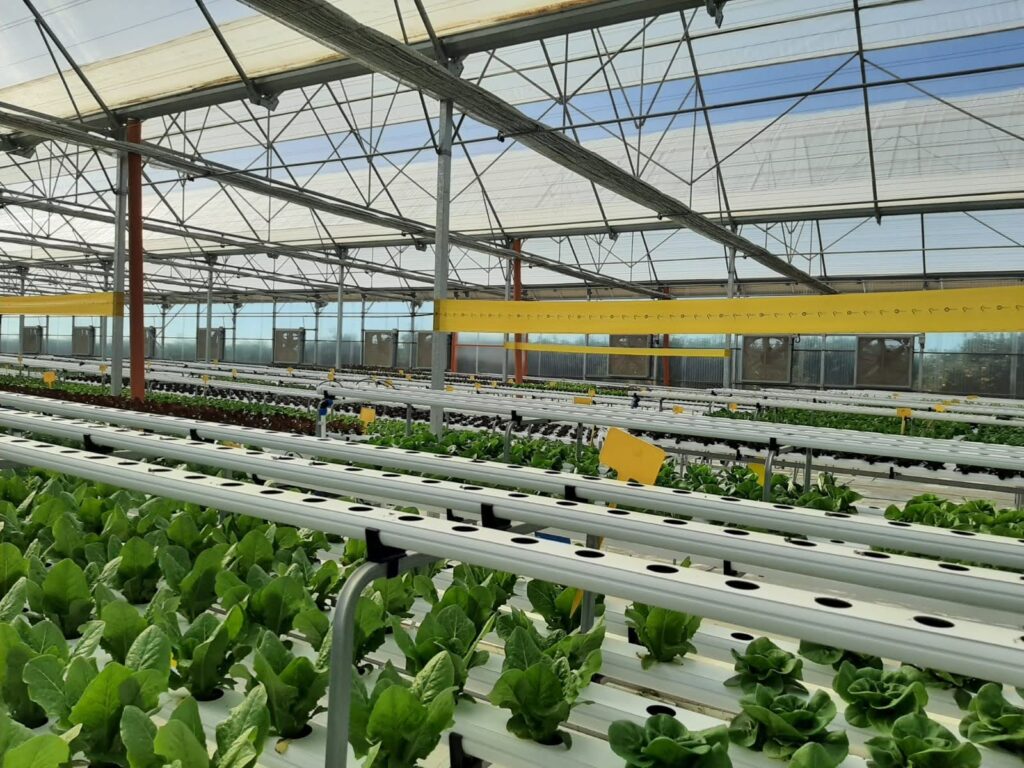
- More adhesive surface: With 91% usable glue area, our traps provide more capture power than standard models.
- Longer lifespan: The durable adhesive and materials require fewer replacements.
- Non-deforming structure: Resistant to humidity and heat, traps keep their shape and stickiness.
- Faster installation: Dual hooks make setup 70% faster, saving hours per hectare.
These features make Hunalan’s dual-hook traps a cornerstone of any integrated pest management (IPM) system, combining efficiency, accuracy, and simplicity.
Frequently Asked Questions About Chromatic Traps
How often should traps be changed?
It depends on pest pressure and crop type, but most should be replaced every few weeks. If the trap becomes saturated earlier, change it immediately to maintain accurate monitoring.
Why does adhesive coverage matter?
A larger adhesive surface captures more insects and extends trap life. Hunalan traps, with 91% active area, ensure continuous capture even in high-density crops.
How can I prevent loss of stickiness in humid environments?
Use traps made with heat-resistant hot-melt adhesive like Hunalan’s. They maintain performance even under irrigation or high humidity.
Consistent Maintenance, Predictable Results
In greenhouse pest management, success doesn’t come from big investments—it comes from small, consistent actions. Inspecting, cleaning, and replacing traps on time can mean the difference between a healthy crop and a costly outbreak.
With Hunalan traps, maintenance is simpler, faster, and more reliable. Their robust structure, market-leading adhesive coverage, and easy dual-hook system keep your greenhouse protected all year long.
Download Your Free Checklist to Optimize Pest Control
Get our full 10-step maintenance checklist and ensure your traps stay efficient season after season.